
 EN
EN
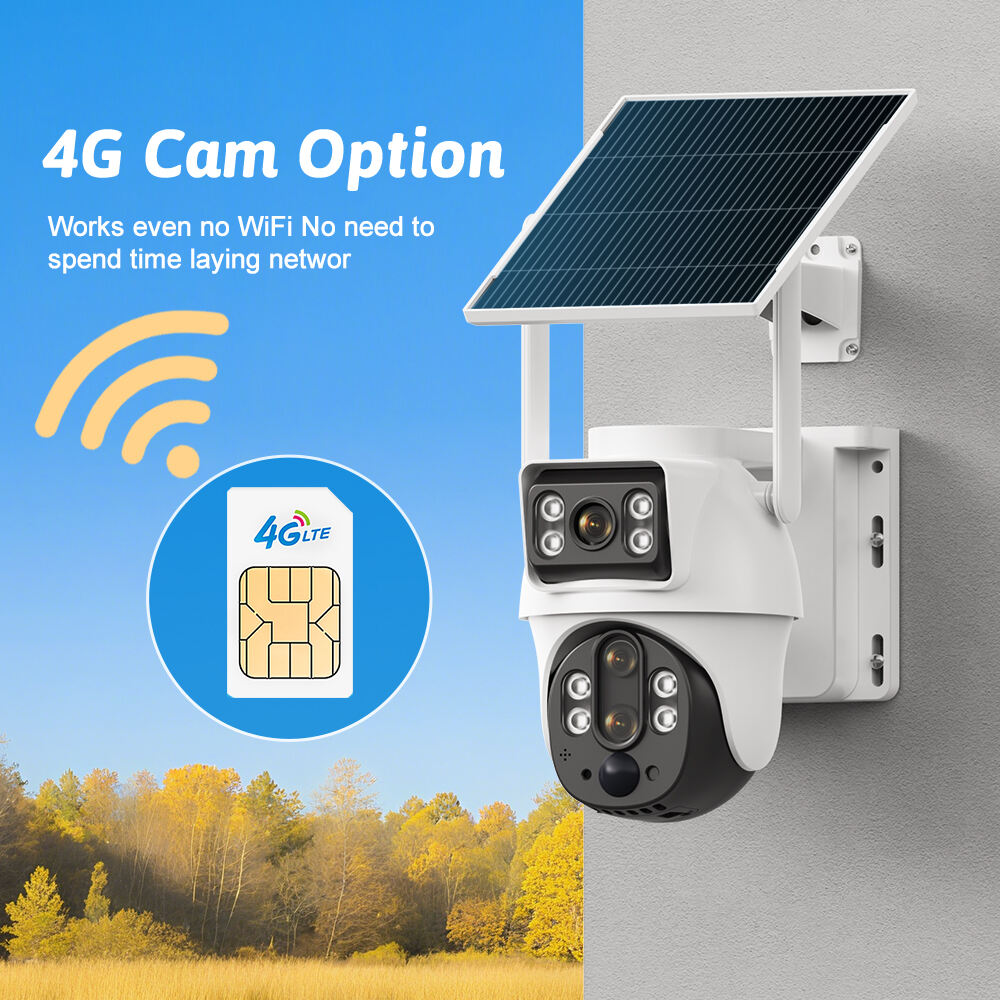
Core Components of a 4G Solar Camera: Solar Power and 4G Connectivity
How Solar Panels Enable Energy Harvesting for Off-Grid Operation
The solar panels found in 4G security cameras work by turning sunlight into usable electricity via those little photovoltaic cells we all know about, allowing these devices to run completely without being connected to any power grid. Most panels produce somewhere between 5 and 10 watts when sitting right in direct sunlight, and they store extra juice in those lithium-ion batteries so the camera keeps working even after dark. Take a standard 10 watt panel for instance it usually takes around six to eight hours of good sun exposure to fill up a 20,000 mAh battery pack. That kind of charge gives roughly five days worth of power before needing another recharge, which is pretty handy during cloudy weather or winter months. These wireless setups are great for places where running cables just isn't feasible, think remote farms or active construction zones where access to electricity might be limited. Some top end models go one step further by incorporating monocrystalline silicon panels that boast impressive efficiency rates of about 22 to 24 percent conversion. That's actually about 30 percent better than what most polycrystalline panels manage, though the difference becomes really noticeable only in certain applications.
The Role of 4G LTE in Transmitting Video Without Wi-Fi
Instead of relying on Wi-Fi, 4G LTE takes advantage of mobile phone networks to send high definition video at speeds around 2 to 4 megabits per second. This works pretty well even when there's no regular internet connection available nearby. The system keeps latency below 25 milliseconds which is important for those instant alerts we need sometimes. Plus it comes with strong security through something called AES-256 encryption to protect all that footage from getting into the wrong hands. Looking at what the industry has found so far, these 4G connected cameras stay online about 98% of the time in places where the signal isn't super strong but still decent (-90 dBm). That makes them way better than satellite options too since they save about 40% on costs according to reports. What's really handy is how these devices can switch between different LTE frequency bands like B12, B13 and B5 as needed. This helps keep things running smoothly whether installed in flat fields or mountainous regions where signals might be tricky to catch consistently.
Integration of Power and Connectivity for True Off-Grid Surveillance
When solar power works together with 4G technology, it basically makes surveillance systems that can run on their own for long periods. The smart energy management stuff actually knows what's important and will cut back on things like video quality when needed. For instance, if the battery gets low, it might drop frame rates from 30 frames per second down to just 15. A recent study from 2024 showed these combined systems can last anywhere between three to seven years before needing much attention at all. That's because they use materials that don't rust easily and can handle pretty harsh conditions, working fine even when temperatures dip below freezing or climb above normal summer heat. What's really cool about this setup is how green it is. These systems leave behind about 65 percent less carbon pollution than those old diesel powered options out there, yet still keep watch over remote areas without missing a beat.
Energy Management: Solar Charging and Battery Storage Efficiency
Battery Technology in 4G Solar Cameras: Ensuring 24/7 Operation
Most 4G solar security cameras these days come with lithium ion batteries and solar charge controllers that manage how much power gets stored versus used. The controllers basically stop batteries from getting too full when the sun is blazing bright and keep them from draining completely overnight. According to some research on solar charge controllers, this kind of regulation can actually double or even triple battery life compared to setups without proper control mechanisms. Smart charging software makes sure the camera stays powered for critical surveillance tasks even when energy levels drop, all while keeping that important cell connection alive so footage keeps uploading properly.
Performance in Low Sunlight: Charging Strategies and Backup Systems
These 4G solar cameras keep working even when the sun takes a break, thanks to smart charging strategies and power-saving sleep modes that kick in when not actively recording. The better models actually store extra juice whenever there's a quick peek of sunlight, grabbing around 15 to 20 percent more energy compared to regular systems. This helps them ride out those gray days without missing a beat. According to findings from a recent solar energy study released last year, combining traditional solar panels with these special supercapacitor tech creates what they call rapid charge bursts. This setup makes sure the cameras stay online even through several days of continuous rain or stormy weather conditions.
Data Insight: Average Battery Life Across Weather Conditions
Testing shows that 4G solar powered cameras can run nonstop for around 72 hours after just one charge even when the weather is overcast, which beats the Wi-Fi versions by about 40%. When there's plenty of sun shining down, these batteries typically get back to full power in between four and six hours. However, if snow starts piling up on those solar panels, energy production drops dramatically somewhere between 60% and 80%. People living in areas where daylight isn't so generous tend to grab extra modular battery packs to keep their systems going during those long stretches without enough sunshine.
4G Connectivity as a Replacement for Traditional Wi-Fi Networks
How 4G LTE Bridges the Gap in Remote Areas Without Internet Infrastructure
Off grid solar cameras work pretty well in places where there's no Wi Fi around at all. Fixed line networks need complicated installation processes, while 4G takes advantage of existing cell towers that cover about 95% of populated areas worldwide according to ITU data from 2023. That's why farmers out in remote fields, workers monitoring construction projects, and rangers patrolling wild spaces find 4G so useful when regular internet just doesn't cut it. Take those solar powered cameras installed in forest reserves for example they send out fire warnings instantly through 4G signals instead of depending on unreliable satellite connections or paying for expensive wiring that nobody wants to maintain anyway.
Comparative Advantage: 4G vs. Wi-Fi for Off-Grid Security Cameras
4G solar cameras outperform Wi-Fi models in three key areas:
- Coverage: 4G signals extend over miles, while Wi-Fi range rarely exceeds 300 feet
- Speed: 4G LTE supports up to 150Mbps downloads, sufficient for streaming 1080p video
- Scalability: Cellular networks handle multiple devices without bandwidth throttling
In contrast, Wi-Fi struggles with latency spikes and signal degradation over distance, making 4G a pragmatic choice for remote surveillance.
Network Reliability and Data Transmission Security via 4G
Today's 4G networks use something called AES-256 encryption along with secure tunneling protocols to keep video feeds safe from being intercepted. This is really important stuff for places that are considered high risk, such as those utility substations where security matters a lot. According to some research done by Taoglas, these 4G systems stay online about 99.9 percent of the time when there's decent signal strength around. That means surveillance cameras can keep working even when bad weather hits or there's a power cut somewhere. There's also this thing called redundant carrier agreements which helps reduce downtime problems. Basically, it lets the devices change to another service provider automatically whenever one network goes down for whatever reason.
Installation and Operational Benefits in Remote Locations
Simplified Deployment in Inaccessible or Rural Terrain
The 4G solar camera system removes those pesky infrastructure problems that stop regular surveillance setups from working properly. These cameras don't need existing power lines running to them or any Wi-Fi network connection at all. With tough solar panels and built-in cell modems, installing these things becomes possible even in really rough places like mountains, thick woods, or anywhere else that's tough to reach. Most installations take just 2 to 3 hours total, which beats out traditional wired options by about 73%. According to field techs who actually work with this stuff day in and day out, deploying these systems cuts down on costs roughly 58% when compared to digging trenches through rocky ground or sensitive wetland areas as noted in last year's Off Grid Security Study.
Reduced Maintenance Needs Due to Energy Independence
Self-sustaining power systems slash site visits by 89% annually by avoiding battery swaps and cable repairs common in conventional setups. Dual lithium batteries maintain operations through 4+ days without sunlight, while self-cleaning solar panel coatings prevent dust accumulation—critical in arid regions where particulate buildup reduces energy harvest by 34% on average.
Case Study: Agricultural and Wildlife Monitoring Applications
In a 12-month trial across 14 farms, 4G solar cameras reduced crop theft by 62% through real-time perimeter alerts while withstanding temperature extremes (-22°F to 122°F). Wildlife researchers simultaneously used the technology to monitor endangered species 24/7, achieving 98% operational uptime despite monsoon rains—a 41% improvement over previous satellite-linked systems.
Addressing Performance Challenges and Real-World Limitations
Impact of Prolonged Cloud Cover on System Uptime
Solar powered 4G cameras need regular sunlight to work all day every day. When there are long stretches of cloudy weather, the panels just don't produce as much power anymore, sometimes dropping output between a quarter to half what they normally would. This means the backup batteries get used up quicker than expected. Most systems come with big lithium ion batteries rated at around 10,000 mAh or more. These usually last about five to seven days straight even when light levels drop off. But for places that experience regular seasons of heavy cloud cover, folks often end up needing extra ways to keep things charged. Some install additional solar panels while others go for mixed setups combining both wind and solar power sources to ensure reliable operation through those gray winter months.
Evaluating Marketing Claims vs. Real-World Solar Efficiency
Testing done by third parties shows there's actually a 22% difference between what manufacturers claim about solar efficiency and how these systems really perform when they're not connected to the grid. According to a recent Market Data Forecast study from 2023 looking at devices powered mainly by solar energy, around 38% of those 4G security cameras don't meet their promised uptime numbers once installed where shade or partial blockage is present. The good news is some honest companies have started offering special solar calculators tailored to specific locations. These tools let potential buyers get a better idea of how much power their setup might gather depending on local weather conditions throughout the year.
Best Practices to Maximize Charging Efficiency and Longevity
- Position solar panels at 30—45° angles facing true south (northern hemisphere)
- Wipe panels biweekly to prevent 15—20% efficiency loss from dust accumulation
- Enable motion-activated recording to reduce 4G data usage by up to 40%
Guides from solar energy researchers emphasize using monocrystalline panels with â€23% efficiency ratings for cloudy climates, coupled with deep-cycle batteries rated for 2,000+ charge cycles. These measures extend off-grid operational lifetimes to 5—8 years even in suboptimal conditions.
FAQs
What are the main benefits of using 4G solar cameras?
4G solar cameras offer off-grid operation without requiring power lines or Wi-Fi networks, making them ideal for remote locations. They provide high-quality video transmission over 4G LTE networks, energy independence through solar power, and reduced maintenance needs.
How do solar panels in 4G cameras work?
Solar panels convert sunlight into electricity using photovoltaic cells, which charge lithium-ion batteries to power the cameras. This allows them to operate during the night or on cloudy days when direct sunlight is unavailable.
Can 4G solar cameras work in low sunlight conditions?
Yes, 4G solar cameras use smart charging strategies and backup systems to ensure continued operation even during gray days. Advanced models can store additional energy during brief sunlight exposures.
What are the challenges associated with using 4G solar cameras?
Challenges include reduced solar efficiency during prolonged cloudy weather, discrepancies between claimed and actual performance, and potential need for supplementary power sources in certain environments.
Table of Contents
- Core Components of a 4G Solar Camera: Solar Power and 4G Connectivity
- Energy Management: Solar Charging and Battery Storage Efficiency
- 4G Connectivity as a Replacement for Traditional Wi-Fi Networks
- Installation and Operational Benefits in Remote Locations
- Addressing Performance Challenges and Real-World Limitations
- FAQs