
 EN
EN
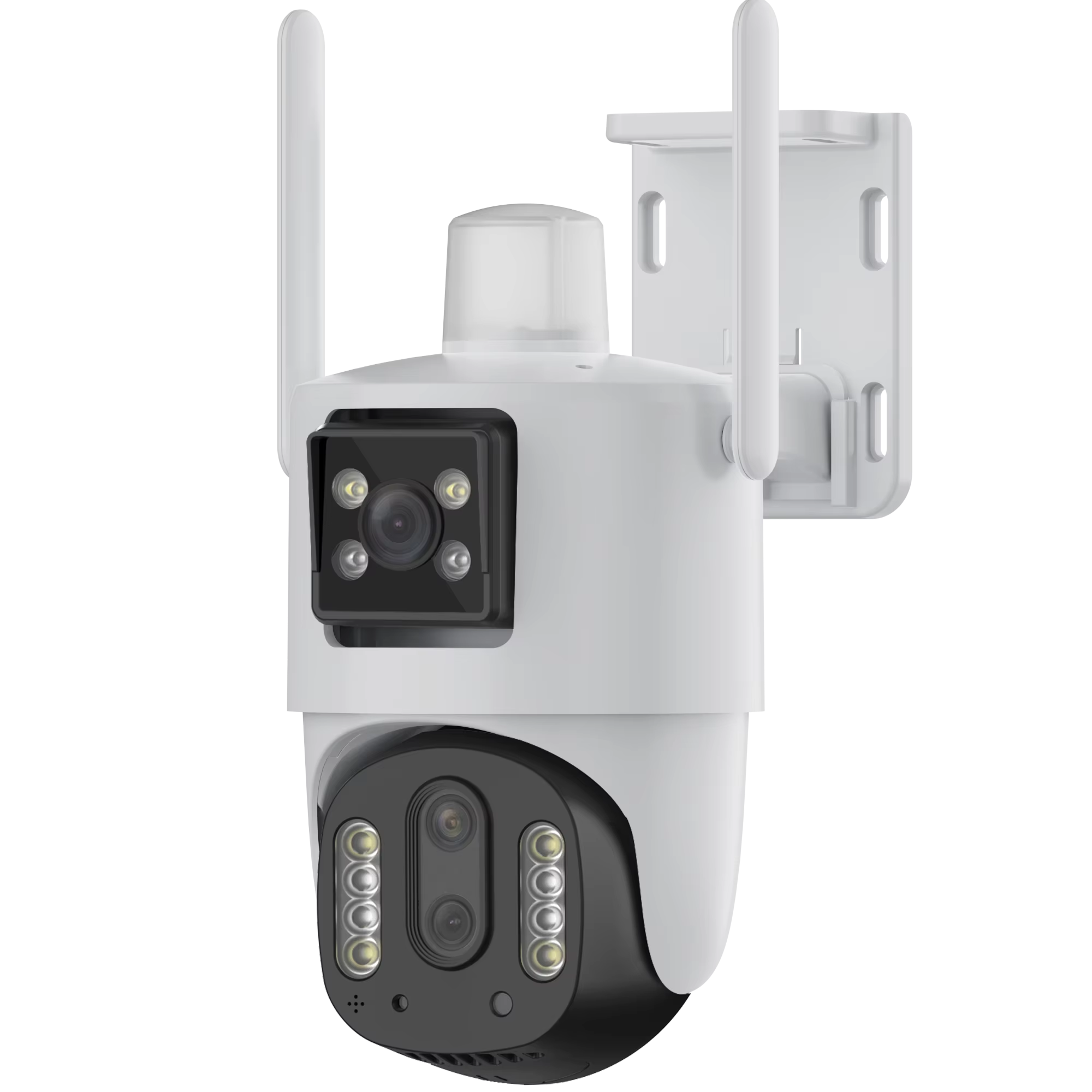
Resolution: Why 1080p Is the Minimum Standard for Reliable Baby Monitor Video
720p vs. 1080p: Critical Differences in Facial Recognition and Breathing Monitoring
The jump from 720p to 1080p means getting roughly double the pixels on screen (2.1 million versus just under a million). This makes all the difference when parents need to spot those tiny signs their baby might be struggling. Think about things like watching for chest movement that's barely 5 millimeters deep or seeing if an expression is forming even through the metal bars of a crib. Both resolutions can pick up general movement, sure, but only with 1080p's 1920 by 1080 arrangement does anyone stand a real chance at telling apart regular nighttime fidgeting from something more serious going on with breathing. And let's not forget what happens in those dimly lit nurseries where most monitoring takes place. The extra pixels mean there's still enough detail left after dealing with grainy images, so parents aren't constantly getting alarmed by nothing while they're trying to catch some sleep themselves.
2K/4K in Practice: Limited Safety Gains Due to Sensor, Lens, and Compression Constraints
Despite marketing claims, 2K and 4K baby monitors offer negligible real-world safety advantages over 1080p due to three fundamental hardware and transmission limits:
- Sensor limitations: Most compact camera sensors (typically <1/2.5") lack the light-gathering capability needed to resolve true 4K detail in dim nurseries
- Optical compromises: Entry-level lenses cannot physically resolve beyond ~1080p line pairs/mm—higher resolutions are often digitally interpolated, not optically captured
- Bandwidth bottlenecks: Wi-Fi compression and transmission artifacts degrade 4K feeds to effective 1080p quality in practice
The marginal visual gains—like counting individual eyelashes—provide no clinical value for detecting breathing irregularities, limb entrapment, or distress signals. That’s why industry standards—including those referenced by the Consumer Technology Association and pediatric telehealth guidelines—emphasize low-light sensitivity, signal reliability, and diagnostic clarity over ultra-high resolution.
Low-Light Performance: The Most Critical Video Quality Factor for Nighttime Baby Monitoring
IR Illumination Range and Starlight Sensors: Delivering Usable Detail at <0.1 lux
When it comes to seeing in almost total darkness, infrared lighting works hand in hand with starlight sensors to give us something we can actually use. These high sensitivity starlight sensors are really good at picking up on whatever tiny bit of light there is around, like when there's just moonlight available. They work best when the light level drops below 0.1 lux, which basically means it's as dark as a night without any moon. The secret? Bigger pixels (at least 2.9 microns) and better signal to noise ratios make all the difference. Regular cameras start struggling once things get darker than 1 lux, but top quality monitors do things differently. They pair broad spectrum IR LEDs operating at about 850 nanometers with fast f/1.6 lenses so they can gather as much light as possible. This setup lets them show details that would normally be lost, like how a blanket folds over itself, without blowing out the image or losing definition between light and dark areas.
Real-World Night Vision Benchmark: Detecting Subtle Infant Cues
True low-light performance is measured by its ability to support life-critical assessments:
- Chest rise detection requires resolving millimeter-scale movement under 0.5 lux
- Pacifier displacement monitoring depends on contrast sensitivity between silicone and skin tones
- Limb twitch recognition demands motion clarity without blur-induced ambiguity
Standard 1080p cameras often fail these tasks—not due to resolution, but because sensor noise overwhelms low-contrast details. Clinical simulations confirm optical fidelity—not megapixel count—is decisive: monitors preserving ¥55dB SNR detected breathing irregularities 92% faster than high-resolution models with inferior sensors and noise handling.
Optical and Mechanical Features That Preserve Video Fidelity in Live Baby Monitor Feeds
Wide-Angle Lenses: Balancing Full-Crib Coverage with Minimal Distortion
Good wide angle lenses need to show the whole crib while keeping things looking accurate. Ultra wide angles above 135 degrees definitely get rid of those annoying blind spots, but they come with their own problems. The fish eye effect makes faces look strange and limbs appear in weird positions, which matters a lot when checking if someone is in distress or has an open airway. Better monitors actually use these fancy multi element lenses that keep straight lines looking straight throughout the image. They maintain pretty good clarity around the edges too, though not everyone needs to know it's technically 720p or better. For nurses and other caregivers, this means they can watch breathing patterns and see where pacifiers are placed all over the sleeping area without having to depend on software fixes that just make everything look worse and harder to trust.
Pan/Tilt/Zoom (PTZ): Optical vs. Digital—Why Only True Optical PTZ Maintains Baby Monitor Clarity
When using digital PTZ cameras, what happens is they basically crop and upscale the video feed, which ends up reducing image quality exactly at times when we need to see things clearly. Think about trying to check if someone's chest is moving properly or looking closely at their mouth position for signs of reflux issues. That just doesn't work well with digital zoom. Optical PTZ works differently though. These systems physically move the lens instead of digitally manipulating the image, so they keep all the original sensor resolution intact. Take a 3x optical zoom for instance it maintains that native 1080p clarity even when examining those tiny details around the mouth or nose area. Plus there's another benefit worth mentioning here the way these lenses silently and smoothly adjust position means they won't wake up sleeping babies during nighttime monitoring sessions. The Juvenile Products Manufacturers Association did some actual testing on this and found that parents really appreciate not having their infants disturbed while still getting good quality footage for health assessments.
Signal Integrity: How Capture, Compression, and Transmission Affect Real-Time Baby Monitor Video Quality
Signal integrity matters a lot when it comes to getting reliable readings from baby monitors. There are basically three parts to how this works: capturing images, compressing them, and sending them wirelessly. The quality of the sensor makes all the difference, particularly at night or in dim lighting conditions. Bigger sensors along with better pixel design tend to pick up more useful information even when visibility is poor. What happens next during compression affects both picture quality and how much data gets sent over the airwaves. Cutting down on file size too much creates problems like blocky pixels and odd color shifts that make it hard to see important details such as facial features or breathing patterns. Last but not least, signals have to fight their way through various sources of interference found in nurseries these days including microwave ovens and voice assistants. This kind of disruption sometimes causes delays exceeding 100 milliseconds, which could mean missed warnings at crucial moments. If parents want clear, detailed video streams consistently, they should look for models that use H.265 compression technology combined with dual band Wi-Fi covering both 2.4GHz and 5GHz frequencies. This setup helps keep things running smoothly without losing those small but vital visual cues.
FAQ Section
Why is 1080p resolution recommended for baby monitors?
1080p resolution offers detailed video quality, essential for detecting subtle cues in a baby's movement and facial expressions, especially in low-light conditions.
Do 2K and 4K monitors provide better safety features?
Despite higher resolutions, 2K and 4K monitors often offer negligible safety advantages due to sensor, lens, and compression constraints that limit real-world clarity in dim lighting.
How important is low-light performance in baby monitors?
Low-light performance is critical for night monitoring, as it helps detect essential life-critical assessments like chest rise and pacifier displacement in almost total darkness.
What optical features maintain video fidelity in baby monitors?
Wide-angle lenses and true optical PTZ systems preserve video clarity, helping caregivers monitor breathing patterns without distortion or unnecessary software fixes.
Table of Contents
- Resolution: Why 1080p Is the Minimum Standard for Reliable Baby Monitor Video
- Low-Light Performance: The Most Critical Video Quality Factor for Nighttime Baby Monitoring
- Optical and Mechanical Features That Preserve Video Fidelity in Live Baby Monitor Feeds
- Signal Integrity: How Capture, Compression, and Transmission Affect Real-Time Baby Monitor Video Quality
- FAQ Section