
 EN
EN
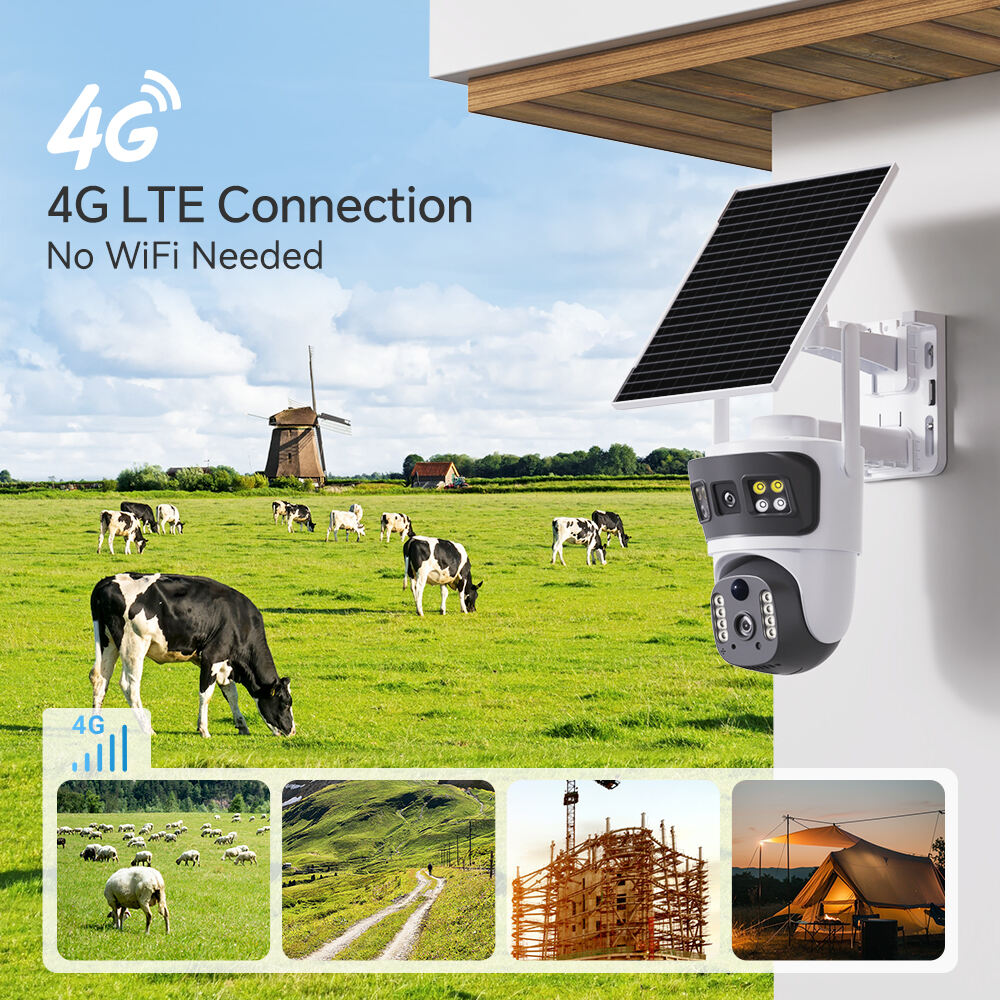
Understanding 4G Solar-Powered Security Cameras for Off-Grid Use
Solar powered 4G cameras combine clean energy sources with mobile network connections so they can provide consistent security monitoring even when there's no access to regular electricity grids or standard internet services. These kinds of systems really tackle one of the big problems facing remote area monitoring since traditional security equipment often doesn't work properly because it needs infrastructure that just isn't available out there. A recent report from the Ponemon Institute back in 2023 showed some pretty shocking numbers too. They found that places which aren't monitored remotely end up costing businesses around seven hundred forty thousand dollars each year in lost time and productivity. That makes having independent security systems absolutely necessary for both day to day operations and keeping business expenses under control.
Core Components: Solar Panel, Battery, and 4G/LTE Module
The system relies on three key components:
- 10W solar panels generating 800–1,200Wh monthly under temperate conditions
- 10,400mAh batteries providing 5–7 days of autonomous operation
- 4G LTE modems consuming 2.5W during active transmission
This configuration enables 24/7 functionality with as little as 4 hours of daily sunlight, aligning with established cellular IoT energy efficiency standards.
Performance of Cellular Security Cameras in Remote Areas Without Power or Internet
When there are at least two bars showing on the phone, these 4G cameras work really well most of the time about 98 percent of the time actually. They can stream full HD 1080p footage at 15 frames per second even when no Wi-Fi connection exists nearby. And don't worry too much if the cell signal gets spotty either. The cameras have something called adaptive bitrate tech built right in so those important motion alerts still get sent out to people's phones within just three seconds or so. As for keeping everything safe from hackers, they use what's known as AES-256 encryption which happens to be the same protection method found in almost all professional security setups across the country according to industry reports.
Efficient Power Management (Solar Charging, Battery Life, Off-Grid Operation)
Advanced controllers significantly improve energy efficiency:
| Parameter | Standard Systems | Optimized 4G Solar Cameras |
|---|---|---|
| Solar Conversion Rate | 18-20% | 22-24% (MPPT controllers) |
| Nightly Power Draw | 8-12Wh | 4.5-6Wh |
| Cloudy Day Reserve | 36 hours | 84 hours |
A 30-day field trial in Alaska confirmed 90% uptime despite 17 days of less than 50% sunlight, demonstrating robust performance in high-latitude environments.
Cellular vs. Wi-Fi Connectivity in Remote Outdoor Settings
Limitations of Wi-Fi in remote areas without electricity or internet
Most Wi-Fi signals don't go much beyond 300 feet before they start fading away. The signal drops even more dramatically when trees block the path or mountains get in the way, losing about three quarters of its strength compared to what we see in cities. Of course, all this depends heavily on whether there's already electricity running through the area and good internet connections nearby. According to an IoT report from last year, nearly seven out of ten devices relying solely on Wi-Fi simply stop working when taken outside regular grid coverage zones where no router was installed beforehand. These gadgets usually need complicated mesh network setups just to function at all, but those setups consume precious solar energy very quickly.
Why 4G/LTE is a reliable alternative for solar-powered security cameras
4G/LTE leverages nationwide carrier networks, maintaining connectivity up to 22 miles from the nearest tower. Built-in encryption exceeds WPA3 standards, and no local networking hardware is required—enabling rapid deployment in disaster response or wildlife monitoring scenarios.
Real-world performance of 4G solar cameras in no-power zones
Field tests conducted in the far north of Canada last year revealed impressive results: around 98.6 percent system uptime even when temperatures dropped to minus 22 degrees Fahrenheit, with roughly 14 hours of daylight each day. The devices maintained solid video feeds through snowstorms thanks to their adaptive signal boost technology. Meanwhile, smart power management kept batteries going for three to five days straight during those long gray days without much sun. These rugged little cameras work wonders on construction projects out in the boonies and farming operations way off the grid where regular internet just isn't feasible most of the time.
Solar Charging Efficiency and Battery Life Under Real Conditions
Battery Life and Solar Charging Efficiency in Wireless Security Cameras
Top-performing 4G solar cameras can last up to 51 days on a single charge when operating in low-power mode. Key factors influencing efficiency include:
- Solar panel output (typically 6–10W)
- Battery capacity (6,000–12,000mAh lithium-ion)
- Power-saving algorithms that reduce standby consumption by 40%
High-efficiency monocrystalline panels recharge batteries in 45–105 minutes of direct sun, supporting continuous operation even with intermittent cloud cover.
Impact of Weather and Sunlight Exposure on 4G Solar Camera Performance
Cloud cover reduces charging speed by 14% on average. In northern latitudes above 45°, shorter daylight hours require 23% larger panels for consistent performance. A 2024 study found these cameras maintained 89% uptime over 14 rainy days using adaptive protocols that prioritize cellular connectivity during low-power states.
Case Study: 30-Day Field Test of a 4G Solar Camera on a Rural Property
A system deployed on a 10-acre farm achieved 97% operational reliability despite 18 days of partial cloud cover. Results included:
| Metric | Result |
|---|---|
| Total solar harvested | 8.7 kWh |
| Cellular data usage | 6.2 GB |
| Motion alerts sent | 287 |
| Night vision accuracy | 94% |
Directional panel placement avoided tree shading, and the 9,800mAh battery provided 11 days of backup during extended storms.
Strategies to Optimize Solar Absorption in Shaded or Northern Climates
- Tilt mounting (15–30° winter angles) increases winter harvest by 18%
- Hybrid charging integrates auxiliary wind power for prolonged storm resilience
- Adaptive frame rates cut power demand by 55% during inactive periods
- Thermal-regulated batteries operate efficiently from -22°F to 131°F
Smart charge controllers prevent reverse current leakage, preserving 92% of stored energy overnight—enabling reliable function in Alaska’s winter darkness and the Pacific Northwest’s rainforests.
Durability and Weather Resistance for Long-Term Outdoor Use
Weather-resistant design and outdoor durability (IP65/IP67 ratings)
Designed for harsh environments, 4G solar cameras feature IP65/IP67-rated enclosures that resist dust and water ingress. IP67 models withstand submersion up to 1 meter for 30 minutes. Critical components are shielded with UV-stabilized polymers and corrosion-resistant alloys, a design validated in material durability studies focused on extreme weather performance.
Long-term reliability of solar-powered security cameras in extreme conditions
Testing has shown these devices work reliably across a wide range of conditions, operating effectively even when temps drop below zero degrees Fahrenheit down to about minus twenty two or climb all the way up past one hundred thirty degrees. They handle humidity too, functioning well at nearly ninety five percent moisture levels without issues. The hardware includes special marine grade stainless steel bolts that resist rust, plus circuit boards coated with protective material to stop damage from salt water exposure. These methods have stood the test of time according to studies tracking performance over ten years on equipment used outdoors in tough environments. When it comes to battery life, top end models maintain around ninety five percent of their original power storage capability after going through roughly a thousand full charge cycles, which is pretty impressive considering most consumer electronics start showing significant degradation much sooner.
Installation, Maintenance, and Practical Applications in No-Power Areas
Simple Installation of 4G Solar Cameras in Outdoor, No-Power Locations
The systems bring together solar panels, batteries, and cell connection all in one package, which means they can be installed within about two hours on poles or walls. There's no need for digging trenches or dealing with complicated electrical work just get some sun and make sure there's decent cell reception nearby. According to a recent study from last year, around three out of four people who tried these systems picked them because how easy they are to set up, especially when working in areas far from civilization where traditional power sources aren't available.
Minimal Maintenance Requirements for Sustained Off-Grid Performance
Energy management is automated, with weather-resistant solar panels needing only quarterly cleaning. Lithium batteries last 3–5 years before replacement, and 4G modules receive automatic firmware updates. A 30-day Arizona test demonstrated 98% uptime through sandstorms with just one manual panel cleaning.
Top Use Cases: Construction Sites, Farms, Cabins, and Disaster-Prone Zones
- Construction sites: Prevent equipment theft without temporary power
- Agricultural operations: Monitor livestock and crops across vast, unpowered land
- Vacation cabins: Maintain year-round security between visits
- Flood/fire zones: Provide post-disaster visibility when grid power fails
Cost-Benefit Analysis: Upfront Cost vs. Long-Term Surveillance Value
While 4G solar cameras have higher initial costs ($400–$800 vs. $200–$500 for wired models), they eliminate recurring expenses like electrician fees (averaging $1,200) and ongoing power bills. USDA-reported rural projects show a 60% lower total cost of ownership over three years, making them a financially sound investment for long-term off-grid monitoring.
Frequently Asked Questions
What are 4G solar cameras, and how do they work in off-grid areas?
4G solar cameras harness solar energy and utilize mobile networks to provide continuous surveillance without relying on traditional electricity or internet connections. These systems are ideal for remote monitoring where infrastructure is lacking.
What components are crucial for the functionality of 4G solar cameras?
The essential components include solar panels, lithium-ion batteries, and 4G LTE modules. This combination ensures consistent performance regardless of sunlight availability.
How reliable are 4G solar cameras in remote, no-power areas?
With adaptive signal technology and robust encryption standards, 4G solar cameras provide up to 98.6% uptime even in challenging weather or geographic conditions.
How efficient are these cameras in terms of power management and battery life?
Advanced controllers improve energy efficiency, allowing these cameras to function on less nightly power and maintain operation during cloudy days.
What factors affect the solar charging efficiency of these cameras?
Solar panel output, battery capacity, and power-saving algorithms are among the main variables influencing efficiency. Weather conditions and geographic location also play roles.
Table of Contents
- Understanding 4G Solar-Powered Security Cameras for Off-Grid Use
- Core Components: Solar Panel, Battery, and 4G/LTE Module
- Performance of Cellular Security Cameras in Remote Areas Without Power or Internet
- Efficient Power Management (Solar Charging, Battery Life, Off-Grid Operation)
- Cellular vs. Wi-Fi Connectivity in Remote Outdoor Settings
- Solar Charging Efficiency and Battery Life Under Real Conditions
- Durability and Weather Resistance for Long-Term Outdoor Use
- Installation, Maintenance, and Practical Applications in No-Power Areas
-
Frequently Asked Questions
- What are 4G solar cameras, and how do they work in off-grid areas?
- What components are crucial for the functionality of 4G solar cameras?
- How reliable are 4G solar cameras in remote, no-power areas?
- How efficient are these cameras in terms of power management and battery life?
- What factors affect the solar charging efficiency of these cameras?